Temporomandibular Joint Treatment
Jaw pain doesn’t have to be permanent
Temporomandibular Joint Disorder (TMD) affects 10 to 15% of adults and is frequently under treated. At Canton Beach Physio on the Central Coast, we use evidence based physiotherapy including manual therapy, targeted exercise and dry needling to deliver clinically significant improvements in pain and jaw function.
What is TMD?
Temporomandibular Disorder (TMD) is the most common cause of non dental facial pain. It covers pain and dysfunction in the jaw joint, surrounding muscles, and associated structures. TMD peaks in adults aged 20 to 40 and is strongly influenced by posture, psychosocial factors, and cervical spine health.
Common symptoms include:
- Jaw pain or aching
- clicking or popping sounds
- Restricted mouth opening
- Locked Jaw
- Temple or fascial headaches
- Ear pain or fullness
- Neck pain and stiffness
- Difficulty chewing

Types of TMD
Articular (Joint Based)
Disc displacement, degenerative joint disease, hypermobility. Typically presents with clicking, locking, or restricted range.
Myofascial (Muscle Based)
Trigger points in masseter, temporalis and pterygoids. Often diffuse aching with referred pain to head and ear.
Mixed Presentation
Both articular and muscular components present simultaneously. Most chronic TMD falls here and requires a multimodal treatment approach.
Cervicogenic Component
Upper cervical dysfunction contributing to jaw pain via the trigeminal cervical nucleus. Physiotherapy treats both systems simultaneously.

Why Physiotherapy First?
Conservative multimodal physiotherapy is the current evidence supported standard of care for TMD. The National Academy of Medicine identified TMD as too long managed as a dental only issue and called for a physiotherapy led multidisciplinary approach.
What the evidence shows
Network meta-analyses rate manual therapy as the treatment with the highest probability of short term success in reducing TMD pain across all modalities.
Manual therapy combined with therapeutic exercise achieves the best medium and long term outcomes. Exercise maintains the gains that hands on treatment achieves.
A systematic review of 7 RCTs found that manual therapy, dry needling, and exercise delivered by physiotherapists are more effective than other treatments in reducing pain and improving mouth opening in TMD.
Our Treatment Approach
Treatment is matched to your TMD subtype: articular, muscular, or mixed. Every program integrates cervical spine assessment and management. Most patients see meaningful change within 4 to 6 sessions.
Manual Therapy
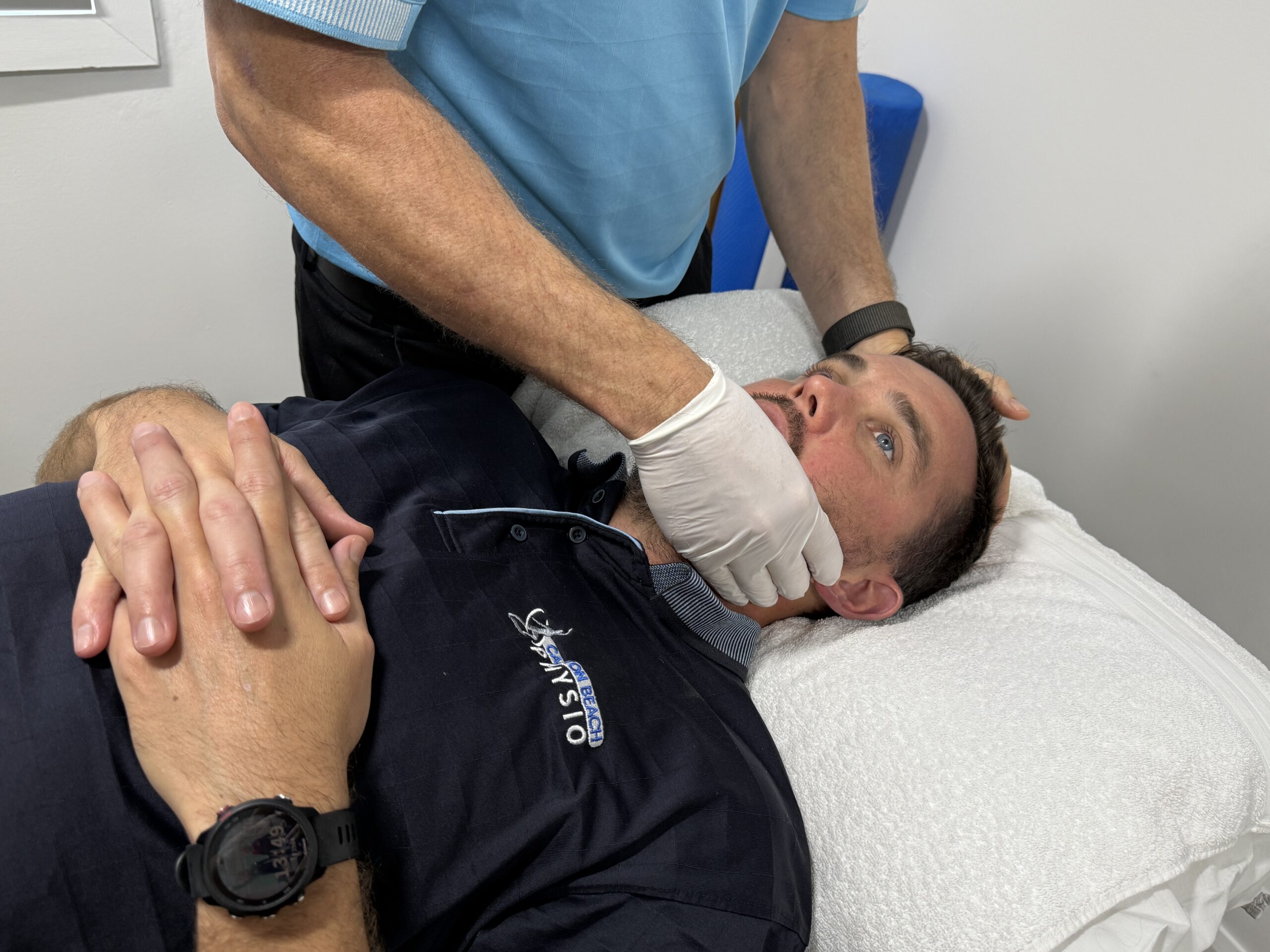
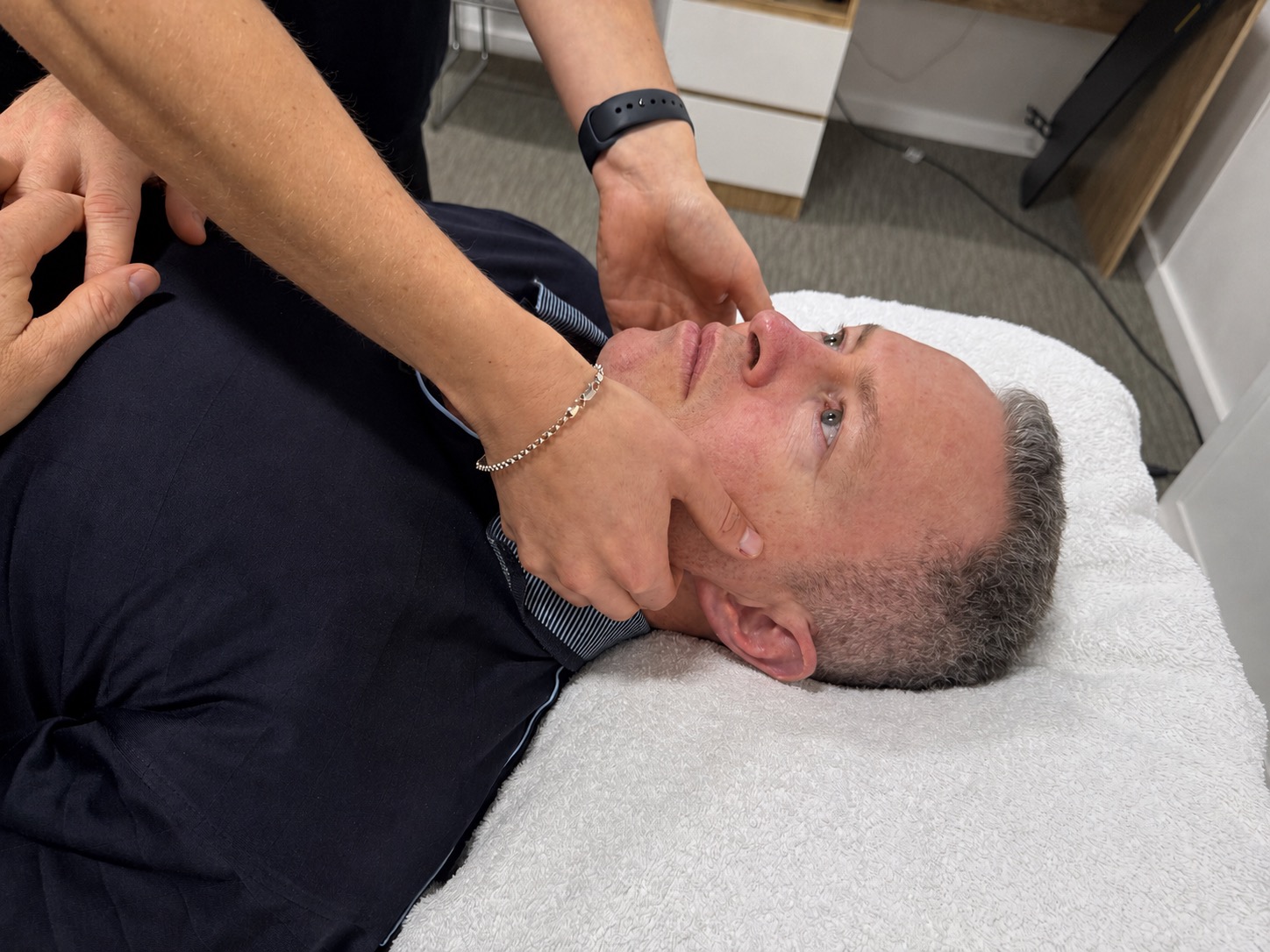
Inferior distraction, anterior glide, and lateral glide mobilisations applied to the jaw joint. Technique grade selected based on whether your presentation is pain dominant or stiffness dominant. Upper cervical manual therapy to C0 to C3 reduces jaw pain and improves mouth opening, backed by RCT evidence.
Dry Needling
Targeted dry needling to masseter, temporalis, lateral and medial pterygoid, suboccipitals and cervical muscles. Comparable short term pain outcomes to manual therapy in myofascial TMD. Always followed by soft tissue mobilisation and exercise.
Exercise Program
Targeted strengthening exercises, stretching and self massage techniques for the jaw and cervical spine. Your personalised exercise program is delivered via Physitrack with instructional videos so you can follow along at home. Progressive loading matched to your presentation and pain level.
Shockwave Therapy
Canton Beach Physio is the only clinic on the Central Coast offering both focused and radial extracorporeal shockwave therapy. Shockwave is an emerging adjunct for myofascial TMD that has not responded to conventional treatment.


Who We Treat
TMJ dysfunction affects people differently. Whether your symptoms started gradually or followed a specific event, physiotherapy assessment can identify what is driving them and where to start.
Headache and facial pain
Persistent headaches, temple pain, or facial aching are frequently driven by jaw and neck dysfunction rather than tension or migraine. Accurate diagnosis changes the treatment direction.
Neck pain with jaw symptoms
The jaw and neck share nerve pathways and muscular connections. Patients presenting with cervical dysfunction often have co-existing TMJ involvement that goes unaddressed elsewhere.
Post-dental procedure pain
Prolonged mouth opening during dental work can overload the TMJ and surrounding muscles. If jaw pain has started or worsened after a procedure, physiotherapy assessment is the appropriate next step.
Bruxism and teeth grinding
Clenching and grinding places sustained load on the jaw joint and musculature. Physiotherapy addresses the muscular component and helps reduce load on the joint.
Post-trauma
A direct impact to the jaw or neck from a motor vehicle accident, fall, or sports collision can alter jaw mechanics. Early assessment reduces the risk of chronic dysfunction.
Jaw pain with clicking or locking
Limited mouth opening, clicking on one or both sides, or a jaw that catches or locks. These are mechanical signs that respond well to hands-on physiotherapy.
Neck-Jaw connection
The jaw and neck function as an integrated system. The muscles, nerves, and joints of the upper cervical spine directly influence jaw mechanics and vice versa. This means jaw pain is frequently driven or maintained by dysfunction in the neck, and neck pain can have a jaw component that never gets addressed.
At Canton Beach Physio, every TMJ assessment includes a cervical spine evaluation. Treating the jaw in isolation often produces incomplete or short-lived results. Understanding both regions is what separates a thorough assessment from a surface-level one.
What to Expect
Ready to sort your jaw?
A single assessment tells you what type of TMD you have, what is driving it, and what a realistic recovery looks like. Most people leave session one with a clear plan and a home program they can start that night.